
Understanding Urbanization
Updated: Sep 11

Part One of the Understanding Urbanization Series
For generations, people have moved to communities like ours searching for something they could no longer find somewhere else: open spaces, clean water, wildlife, neighborhoods where children could ride bicycles, roads that were not always crowded, and communities with room to breathe.
Over time, many of those same communities begin changing. Development expands. Traffic increases. More land is paved, and congestion grows. Schools, utilities, evacuation routes, and natural resources may face increasing pressure. Slowly, a community can begin losing some of the very qualities that made people want to live there in the first place.
This process is called urbanization.
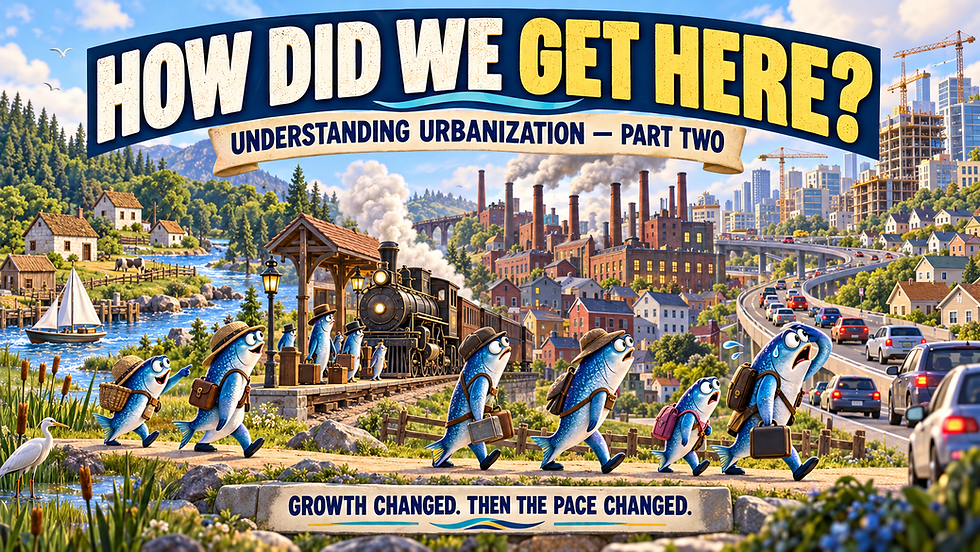
Urbanization is the gradual transformation of a community as population increases and development expands. Homes, businesses, roads, utilities, and public services grow to accommodate more people. It is studied throughout the world because it shapes how communities function and how they change over time.
Some people view urbanization as progress, while others see it as the gradual loss of community character.
Life of a Sardine was created because communities deserve more than slogans. Residents deserve to understand how growth happens, who makes the decisions, and when growth begins changing the very places people came here to enjoy.
When Does Growth Become Overgrowth?
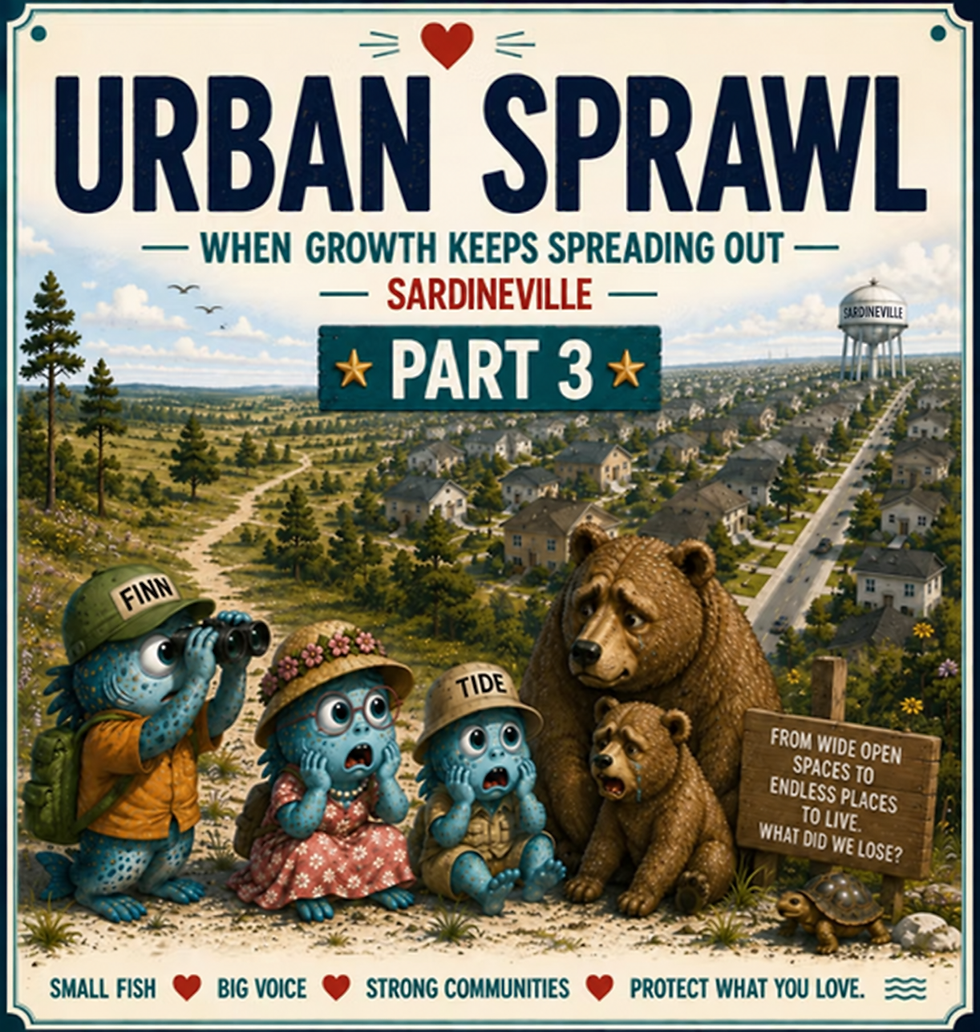
At what point do roads stop keeping pace with the people using them? When do schools struggle to accommodate growth? When does evacuation become more difficult? We should also be willing to ask what happens as forests become subdivisions and wildlife corridors disappear.
Eventually, long-time residents may find themselves looking around and saying, “This isn't the community I remember.”
Those questions are bigger than politics. They are questions of stewardship.
Communities should not lose the very qualities that made them worth protecting in the first place.
A cleared forest cannot quickly be restored. A filled wetland cannot simply be put back the way it was. When a wildlife corridor is fragmented or a quiet community becomes a crowded destination, the consequences of those decisions may last for generations.
Understanding urbanization is not about resisting every change. It is about asking whether change is improving the community—or gradually replacing it.
Before we decide where we are going, we should understand how we got here.
Protect What You Love.

Comments