
The History of Urbanization
Updated: Sep 11

How Did We Get Here?
Part Two of the Understanding Urbanization Series
Cities began as communities.
Long before highways, shopping centers, and subdivisions shaped the American landscape, people established communities where geography offered the things they needed to live and work. Rivers, harbors, fertile land, transportation routes, and access to natural resources often influenced where settlements grew.
Many communities remained relatively small for generations. Compact settlements often existed close to surrounding farms, forests, wetlands, and open land. Growth happened, but the scale and speed of that growth would eventually change dramatically.
The Industrial Revolution Changed the Pace
Beginning in the late eighteenth century and accelerating through the nineteenth century, industrialization changed where many people lived and how they worked. Factories and manufacturing created jobs in growing towns and cities, drawing workers away from predominantly agricultural areas.
As populations concentrated around centers of employment, communities needed more housing, transportation, businesses, and public services. Urban populations expanded, and the physical footprint of many cities expanded with them.
Urbanization was no longer merely the slow growth of settlements. It was becoming a powerful force in the way modern communities developed.
Railroads Redrew the Map
Railroads changed the geography of growth in America. Communities with access to rail transportation could move people and goods over greater distances and connect with markets far beyond their immediate surroundings.
Some existing towns became important commercial centers, while new communities developed along rail routes. Transportation was beginning to determine not only how people traveled, but where growth occurred.
Then another invention changed the map again.
The Automobile Moved the Boundaries
The automobile gave Americans far greater freedom to live farther from their workplaces, businesses, and traditional town centers. As automobile ownership increased and road networks expanded, development could spread farther outward.
The edges of communities moved. Residential development increasingly reached into areas that had previously been rural or undeveloped, particularly as highway construction and suburban development accelerated during the twentieth century.
That outward pattern of development would eventually become part of what planners describe as urban sprawl—the subject of our next lesson.
America After World War II
The decades following World War II brought enormous changes to American communities. Population growth, returning servicemembers, federal housing policies, highway construction, rising automobile ownership, and demand for new homes all contributed to rapid suburban expansion.
New neighborhoods appeared outside traditional city centers. Schools, shopping areas, roads, utilities, and other public services expanded alongside them.
Growth created homes, businesses, jobs, and opportunity. It also created a question communities are still wrestling with today:
Can infrastructure and natural resources keep pace with development?
And That Brings Us to Today
Urbanization continues across the country, but it does not look the same everywhere. Communities differ in geography, population growth, infrastructure, planning rules, environmental conditions, and the authority local governments have over development.
That means growth itself tells us only part of the story.
The more useful question is what happens when the pace or pattern of development begins putting pressure on roads, schools, utilities, emergency services, water resources, wildlife habitat, or other parts of a community.
When does growth become overgrowth?
There is no single answer that applies to every community. But citizens can ask whether infrastructure is keeping pace, whether long-term plans account for changing conditions, what environmental resources may be affected, and how today’s decisions will shape the community inherited by the next generation.
Those questions deserve more than slogans. They deserve evidence.
Where We Go Next
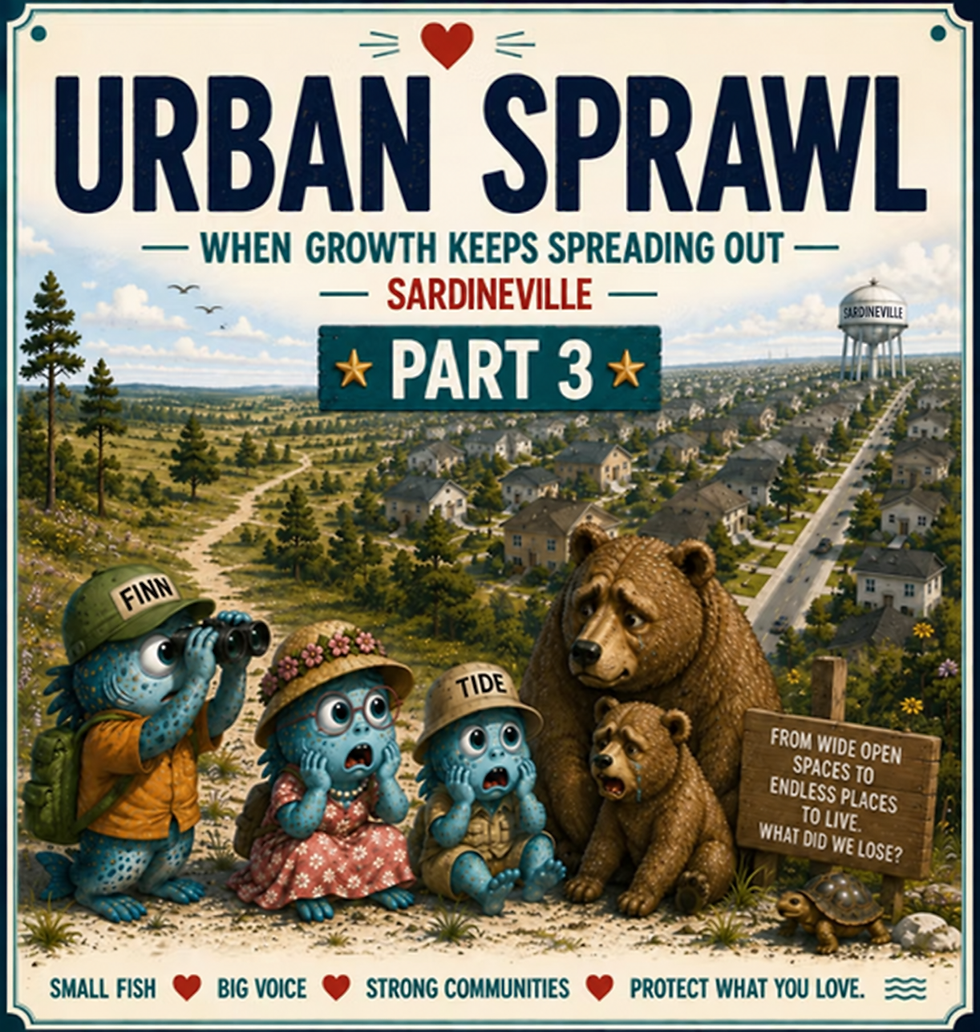
Urbanization and urban sprawl are related, but they are not the same thing.
Urbanization describes the broader process of population concentration and community development. Urban sprawl describes a particular pattern of outward, often low-density development.
That distinction matters because growth is not merely about how much a community grows. It is also about where and how that growth occurs.
That’s where we’re headed in Part Three.
Protect What You Love.


Comments